The Rewrite That Required More Honesty Than Courage
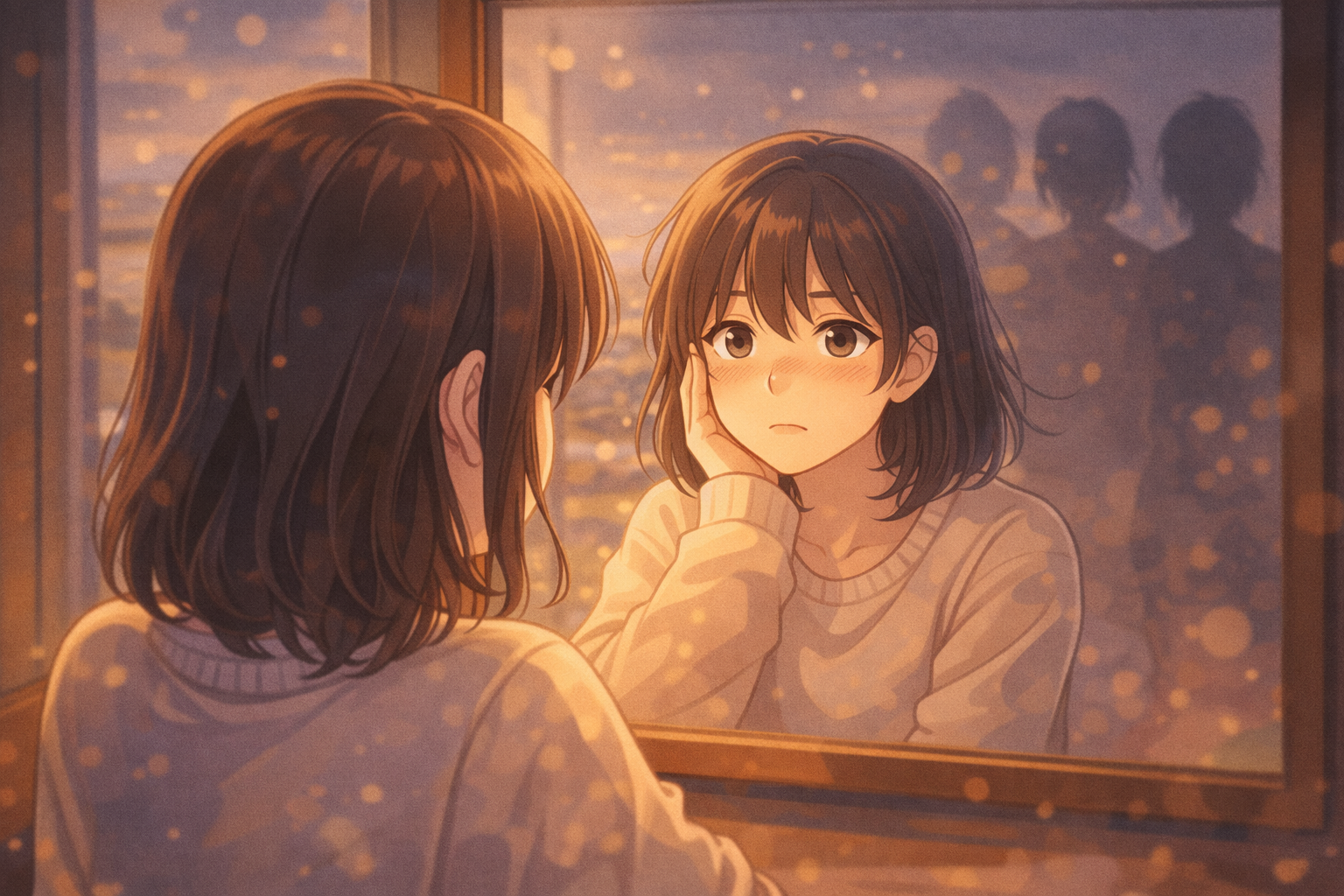
The Rewrite That Required More Honesty Than Courage
Rewriting is hard.
Rewriting something that’s already been published is harder.
Rewriting a full, published trilogy?
…yeah. That one hits differently.
When I finally took off the rose-tinted glasses and reread my trilogy with fresh eyes, a sinking feeling set in. It wasn’t just about craft or structure. It was something more uncomfortable.
I realised how much fear had crept into the writing.
My fear of upsetting people had quietly put a stranglehold on my creativity.
When I drafted the first book, The Arrival, I never expected anyone else to read it. It was written purely for me. But as the story grew, so did the realisation that other people might actually enjoy it.
And that’s when the unintentional self-editing began.
The what-ifs arrived, one after another.
What if my friend who inspired this character hates it?
What if people I know read this?
What if people get upset by the smexy bits?
What if readers don’t like my characters?
What if my parents read it?!
What if my grammar is terrible?
What if I can’t explain the world properly?
Once that door opened, the list never really stopped.
And here’s the uncomfortable truth: none of those questions actually mattered.
I know this now because I lived through the aftermath. I published the books. I read reviews. I was devastated by the ones that didn’t like them. And then, with time and distance, I looked again.
My dad has read the trilogy. He enjoyed it—but prefers my science fiction novel, Prometheus: A New Dawn, simply because it’s more his taste.
And that’s okay.
That was the real lesson. You cannot write to avoid disappointing people, because disappointment is inevitable. Someone will always want something different. Someone will always think you went too far, not far enough, or in entirely the wrong direction.
There will always be writers better than you.
There will always be writers worse than you.
If you let that dictate your work, you’ll never reach the version of the story that actually feels true.
Revisiting the trilogy forced me to confront something I hadn’t fully acknowledged before: the fear wasn’t external. It was internal. It was the urge to people-please. To soften edges. To dilute moments before anyone else had the chance to object.
Letting go of that fear didn’t require bravery so much as honesty.
Honesty about what I wanted the story to be.
Honesty about what mattered to me.
Honesty about the fact that my work will never be for everyone—and isn’t meant to be.
Your work is an expression of you, not a committee-approved compromise. And if you aren’t willing to be honest with yourself on the page, the story will always fall short—not because it’s bad, but because it’s restrained.
Sometimes the most important rewrite isn’t about fixing the words.
It’s about finally letting yourself tell the truth.
Earlier in this series:
The Dreaded Rewrite looks at the practical side of revising a published trilogy, while this essay explores the emotional honesty that revision sometimes demands.
These lessons came from rewriting my BirthRight Trilogy—now available in its newly refined, final form here.
