Killing Your Darlings (And Why It’s Necessary)
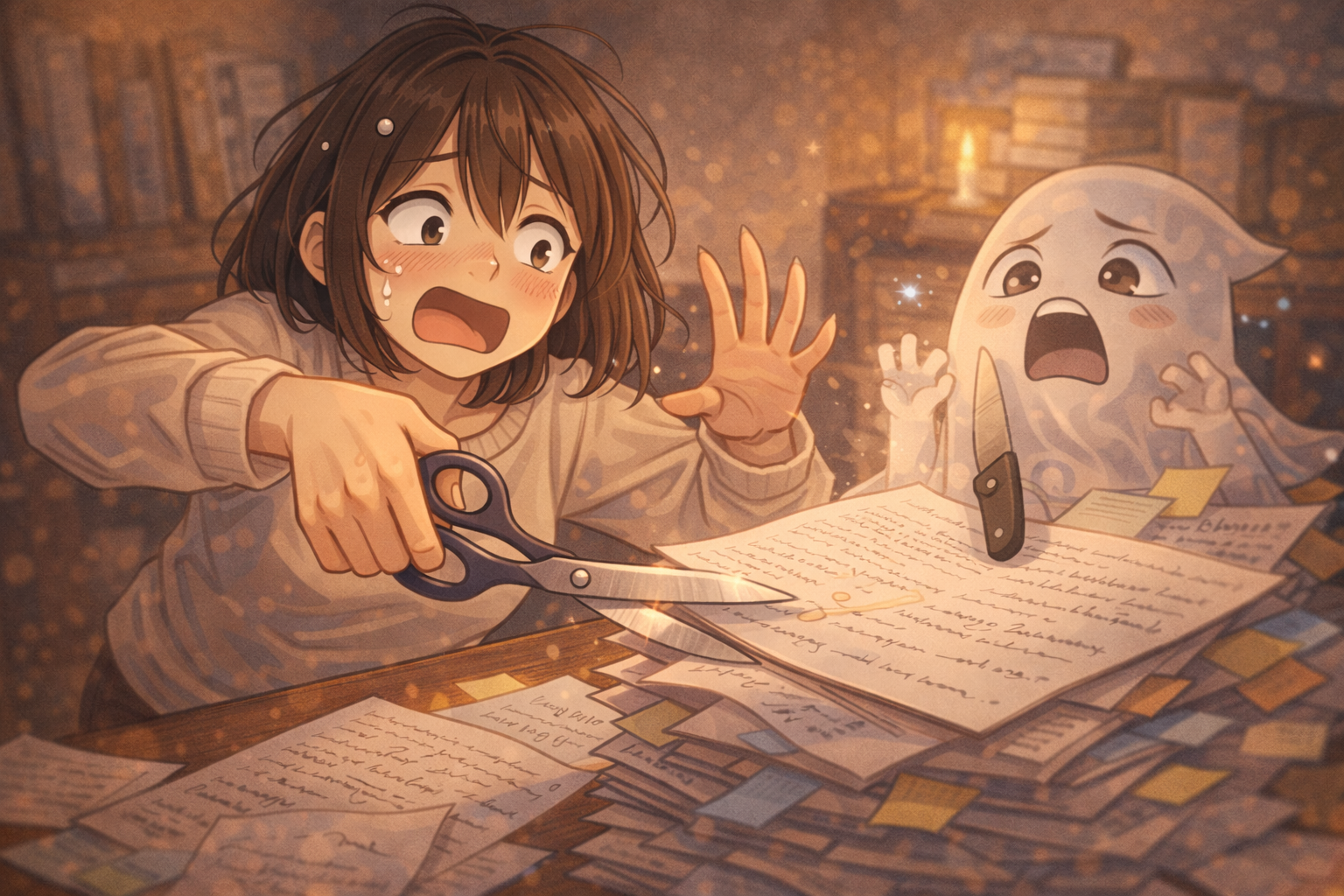
Killing Your Darlings (And Why It’s Necessary)
I don’t think it really occurred to me when I first started writing just how much you grow to adore your characters.
Watching them emerge from the first page, discovering their strengths and weaknesses, seeing them grow into themselves—it’s a bit like having literary children. Considerably cheaper, but emotionally similar (lol).
And then, somewhere along that joyful journey, you hit it.
The moment when you realise… someone has to die.
If you’re anything like me, your first response is denial. I currently have a draft novel sitting maybe four chapters from the end, and I’m pretending it doesn’t exist, because those final chapters are going to be truly, utterly awful for my darlings (full dramatic wail).
But the reality is this: cruelty is sometimes part of the job.
Stories need balance. If you want moments of joy, hope, and triumph, you also need moments that are genuinely miserable. That balance is what gives a story weight. It’s also one of the hardest lessons to learn, and for me, it really crystallised during the first two books of my trilogy.
When I was working on book two (Awakening), I thought I was close to done. Then feedback came from a beta reader—an incredible woman who gave me some of the most valuable insight I’ve ever received.
Her message was simple and devastating:
“Your bad guy isn’t shown as evil enough. You’ve told the reader, but you haven’t shown it. You really need to kill someone.”
I remember staring at that email in disbelief.
Kill someone?
Who could I possibly kill?
What did she mean not evil enough? The character was totally evil!
After a week or so—and I highly recommend letting feedback sit for a while—I reread the draft with fresh eyes.
And I had to admit it.
She was right.
Someone had to die.
What followed was a slightly feverish bout of rewriting as I created new scenes and did the unthinkable. I killed off a character who had earned a collective “squee” from readers the moment they were introduced. It wasn’t a gentle death either. It was brutal, purposeful, and unavoidable.
And it worked.
That single decision hammered home the true nature of the antagonist in a way no amount of exposition ever could. The story immediately gained depth, tension, and emotional weight. The stakes became real.
I could easily wander off here into a long discussion about “show, don’t tell,” but the deeper lesson for me was about balance.
If you have an ultimate evil, you need someone willing to stand as ultimate good. But that doesn’t mean simplicity. Interesting characters aren’t perfect. Evil characters will have things they love—whether that love is genuine or twisted. Good characters can be cruel, whether through thoughtlessness or deliberate choice.
Nuance is what makes characters feel real.
Consequences are what make stories matter.
And at the end of the day, if you want your world to feel alive…
…someone probably has to die.
Earlier in this series:
In When Is a Book Actually Finished?, I explore the tension between refining past work and knowing when it’s time to move on to something new.
These lessons came from rewriting my BirthRight Trilogy — now available in its newly refined, final form here.